How to Practise for the UPSC Interview Alone: A Seven-Day Method
By FluentlySaid Editorial TeamUpdated 23 November 20262 min read
In short
You can practise the UPSC interview alone if you do three things reading cannot do: speak aloud, hear yourself, and get interrupted. This seven-day method uses a recorder, a friend for one session, and one full voice mock. It does not replace a human panel, so keep sitting those.
Cleared Mains? Dates, DAF-II and next steps: UPSC Mains Result 2026
Reading about the interview feels like preparing. It is not. The interview is a spoken test, and the only way to prepare for a spoken test is to speak. If there is no panel on your calendar this week, you can still get most of the benefit alone, if you do three things reading cannot do.
The three things reading cannot do
- Make you speak aloud. An answer that sounds fine in your head often has no ending when spoken.
- Let you hear yourself. Pace, fillers, a first sentence that wanders. You only notice them on playback.
- Get you interrupted. Real boards follow up and disagree. Nobody does that to you when you practise alone.
The seven-day method
| Day | What you do | What you leave with |
|---|---|---|
| 1 | Write one line per DAF section. Say each aloud. | A list of lines you cannot yet say well |
| 2 | Record answers to your home district and graduation questions. Listen once. | Two things to fix in how you speak |
| 3 | Record your optional and work answers. Add the other side of each. | An answer that survives "but why?" |
| 4 | Ask a friend to interrupt you with "why?" three times on each answer. | The answers that break |
| 5 | Run a full voice mock that reads your own DAF. | A report with one thing to fix first |
| 6 | Fix the one thing. Run situations aloud: first, second, third step, who acts. | A clean order of action |
| 7 | Run a second full mock. Compare the two reports. Rest. | Evidence that it moved |
Source: FluentlySaid's suggested plan. UPSC does not prescribe one.
Where an AI mock fits
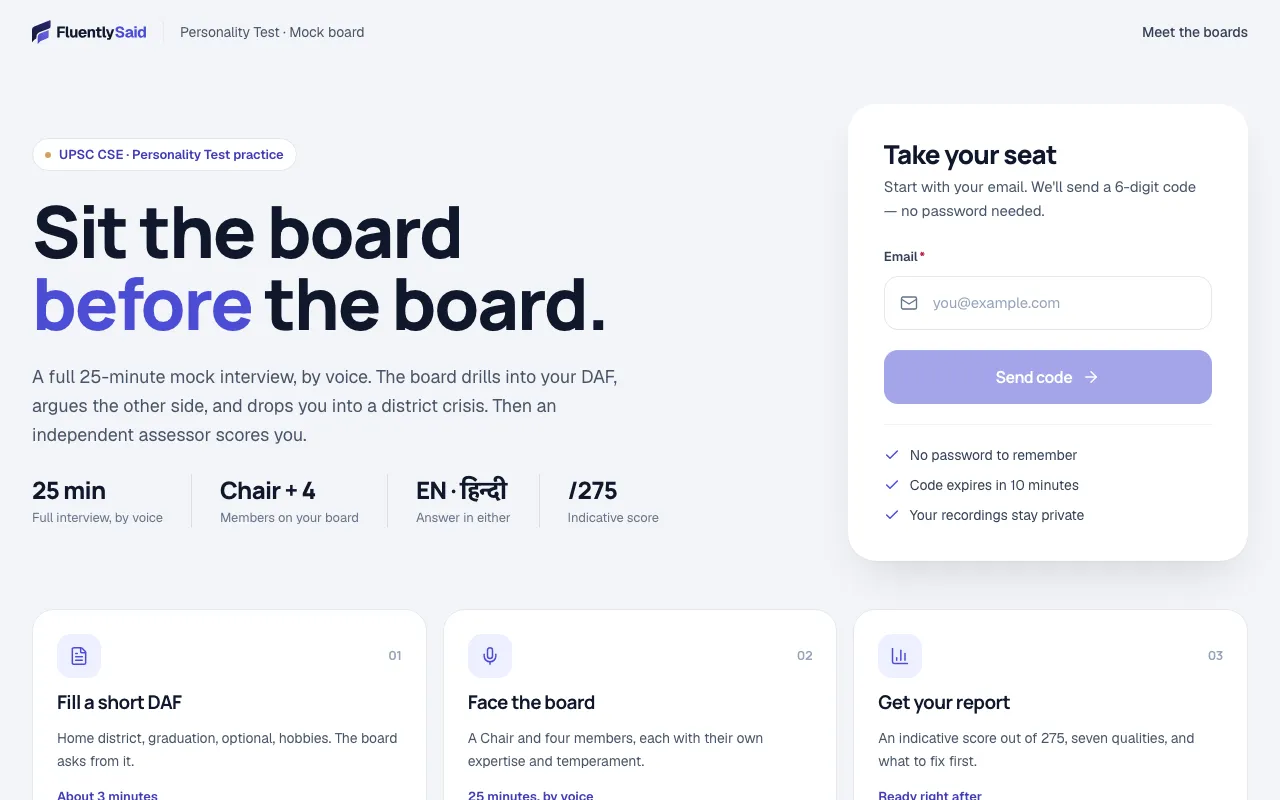
Days 5 and 7 need something that interrupts and disagrees, and a friend cannot always be available for 25 minutes. The FluentlySaid UPSC mock is a Chair and four members by voice. It reads the short DAF you fill in, follows up on what you say, and ends with a written report on what to fix first.
What this does not do
It does not replace a mock with experienced human panellists, who can read how you come across in a room. Keep sitting those. Use home practice to make them count.
Also see the question patterns by DAF section and the do's and don'ts.
Questions
Can I prepare for the UPSC interview without coaching?
Yes. The interview tests you, not a syllabus. What coaching adds is more mocks. You can get repetitions at home if you speak aloud, record yourself and get interrupted by someone.
How many days do I need to practise?
There is no official number. Seven focused days is enough to find and fix your repeated mistakes. More time helps if you use it on mocks and not on reading.
Does practising alone replace a mock with a real panel?
No. A human panel reads your presence in a room and an experienced panellist can tell you how you came across. Use home practice to arrive at those mocks better prepared.
Face the panel before the panel
Sit the board before the board. Start a free UPSC mock interview.
Start a free mock interviewFluentlySaid is not affiliated with or endorsed by UPSC. This is a suggested plan. UPSC does not prescribe one.